
The word “discipline” is often mentioned when it comes to describing a writing practice. I prefer the word “devotion.”
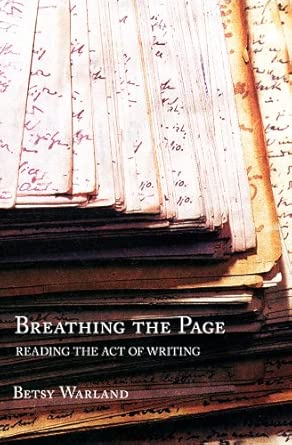 “Our methodology is not as important as our devotion,” Betsy Warland says in Breathing the Page: Reading the Act of Writing.
My writing practice, to which I am devoted, includes reading, attending workshops and retreats, meeting with other writers, writing, and imagining in all sorts of different forms.
Laraine Herring who wrote On Being Stuck: Tapping into the Creative Power of Writer’s Block, makes note of devotion as well: “If you choose writing as one of your acts of devotion, prepare to be a student of its wisdom as long as you show up for its gifts. Writing will put you forward into places you can’t yet see. It will bring with it the challenges you need to become more fully alive and awake. It will bring with it the obstacles you need to grow.”
Recently, while on a silent retreat at home, I realized that time is important for writing (there’s never enough) as well as desire. Sometimes the desire doesn’t manifest into words on the page. It can mean ideas floating in the head. Quiet time is ideal for that sort of imagining and the forming of seeds that aren’t quite ready to blossom.
That’s just right for people who are “makers” as opposed to “producers.” We makers don’t have the need to always produce a physical product. Writing is so much about the process. Is this a book or is this an ongoing process, I asked myself recently.
“Makers” and “producers” are described in Making Time: A New Vision for Crafting a Life Beyond Productivity by Maria Bowler. In my own mind, I think about makers in terms of intentions and producers in terms of goals. An intention is something to stretch towards, enjoying the process along the way, without an end product necessarily in mind. A goal means the future is the focus so that your current practice is all about the future rather than the present.
“Ironically, by being in touch with and acting from your true intentions, you become more effective in reaching your goals than when you act from wants and insecurities.,” says Phillip Moffitt in a Dharma Wisdom article available online called “The Heart’s Intention.”
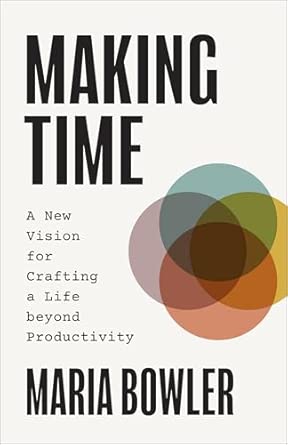 Maria Bowler has a chapter on “Making Delight.” She says: “When you allow yourself to delight in something, you are open to being charmed by it. Unexpectedly and pleasantly transformed by it.”
Rather than a product to be monetized, or task to be accomplished, delight is part of your nature says Bowler. In writing The Book of Delights, poet and essayist Ross Gay discovered that “the more you study delight, the more delight there is to study.”
Gathering with other writers is a delight, observing what is discovered. Also, using our imaginations is good medicine for our times and brings great delight. “You have the capacity to make worlds in your mind,” Maria Bowler says. I delight in the way we can re-envision the ways things were and the way we would like them to be.
It’s a delight to read a poem called “Blueberries” by my poet friend Barbara Pelman who used four lines from a poem, also called “Blueberries,” by our mutual poet friend Laura Apol for her glosa. It’s a delight to write and see what’s revealed on the page which can be surprising at times. That happens a lot in the women’s writing circles I facilitate. Maybe you’d like to join us in June for some devotion and delight?
For five mornings in June (Pacific time), I’ll be facilitating a women’s writing circle on Zoom called “Devotion & Delight: Honouring Your Writing Practice.”
“Honour” – there’s another word to describe the writing life you want to nourish. The dates for the “Devotion and Delight” circle are June 15 to 19, 2026 – five consecutive days – 10 a.m. to 11:30 a.m. Pacific time.
If you’re working on a writing project and would like to keep up the momentum with some writing companions nearby or would like to establish and maintain a writing practice, this writing circle is for you.
Here’s a link to further information: Devotion & Delight.